The studio
Design, printing and hand finishing.
I develop and make SpinStyle in Georgensgmünd, Germany. Two models show which parts come from the printer and where the work by hand comes in.
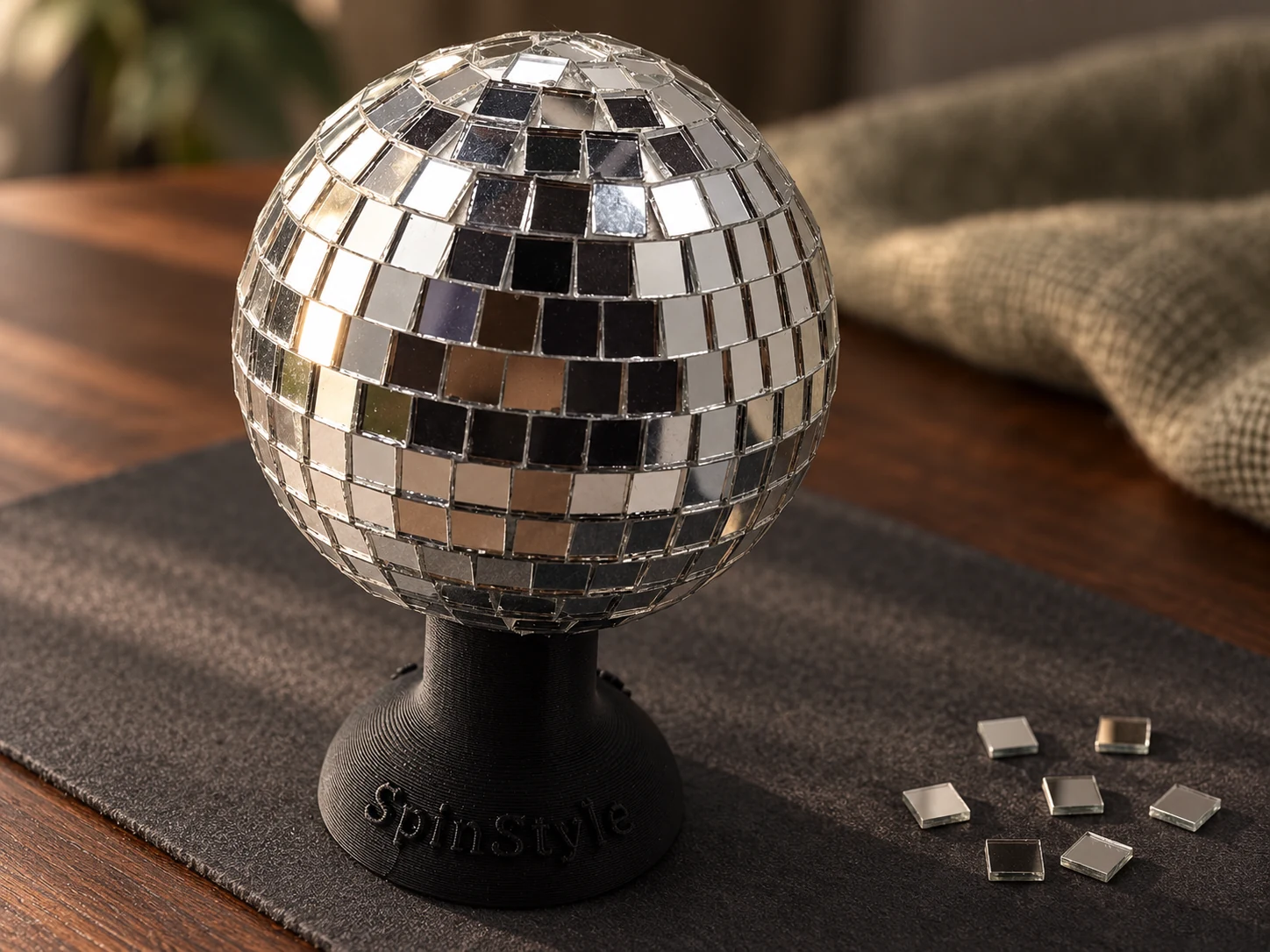
The disco ball
A light core, real mirrors.
The disco ball has a polystyrene foam core. I apply the individual mirror tiles by hand. I print the black base in PLA and attach it to the ball. Small variations in the rows and gaps remain visible. The disco ball arrives fully assembled.
01 / Design
On screen.
I develop the models myself in CAD. Prototypes and revisions help refine the shape and fit before the design goes to its final print.
02 / Printing
The layers remain visible.
The plastic parts are made using FDM printing. Fine layer lines are part of the surface. Different parts call for different plastics.
03 / Finishing
Each model has its own process.
The disco ball combines mirrors and a printed base. The Martini comes in several assemblies that slot together. The construction depends on the design.
The Martini in parts
Three assemblies, one design.
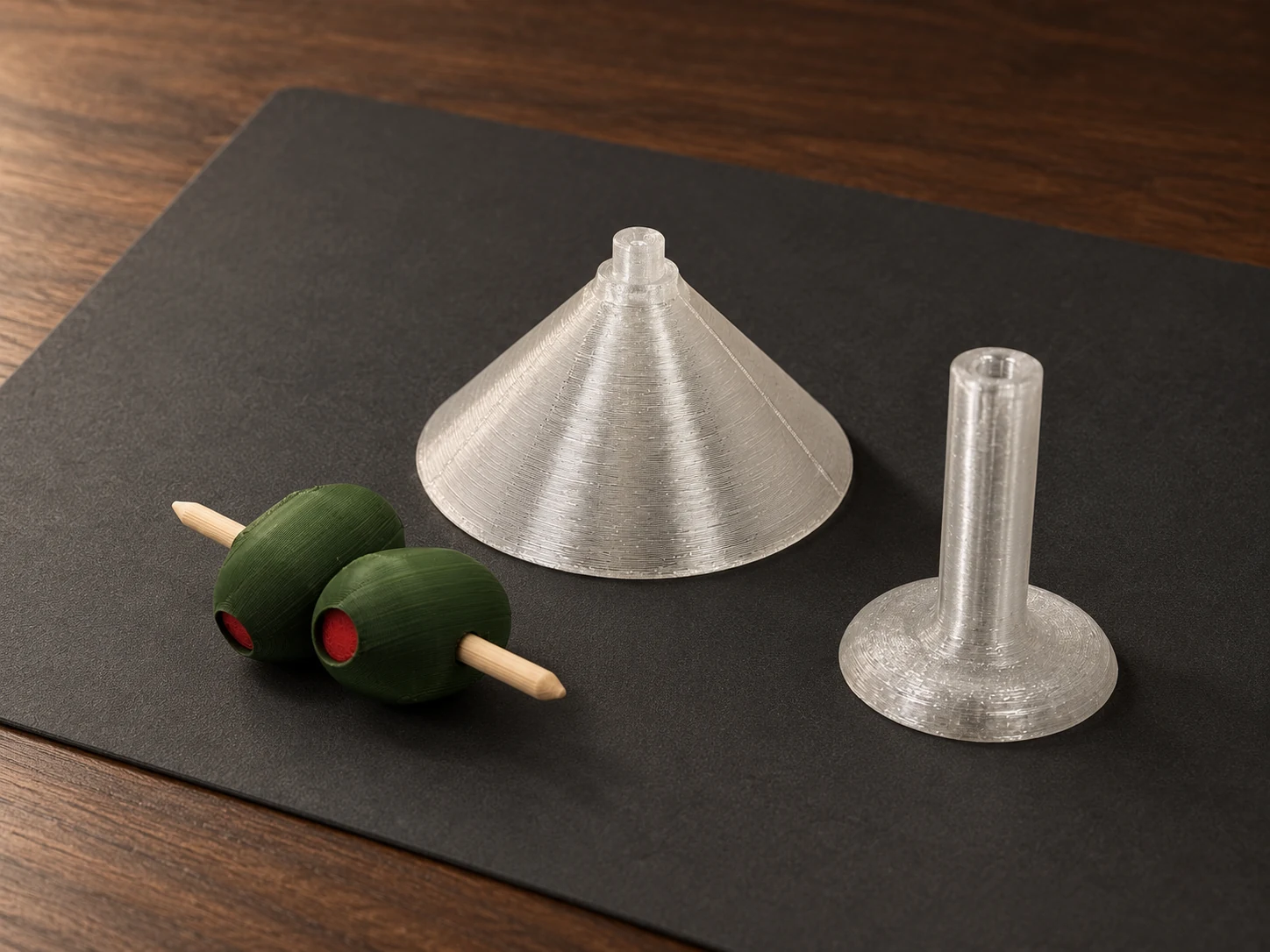
The bowl, stem with base and olive group form the Martini. Slot the two clear glass-shaped parts together, then insert the pre-assembled skewer with its two olives.
- Clear bowl with a connecting pin
- Stem and base with a matching socket
- Two olives on the pre-assembled skewer
Materials & use
Good to know.
Will it fit my turntable?
Every SpinStyle has an 8 mm spindle opening. The objects sit over the spindle at the centre of the record. You can find the overall dimensions on each product page.
Do SpinStyles have a practical use too?
Yes. Most SpinStyles can also serve as 45 RPM adapters for singles with a large centre hole.
Can there be surface imperfections?
SpinStyles are made individually and finished by hand. Small surface imperfections, visible print lines or slight glue residue can occur. Minor differences in colour and dimensions are also possible.
Can the object stay on the record during playback?
SpinStyles are light enough to avoid putting any significant extra load on your turntable. Check the clearance around the tonearm and dust cover before playback so the object can rotate without hitting either.
How should I clean the parts?
Use a dry or slightly damp cloth. Avoid harsh cleaners or solvents such as acetone. Protect the parts from temperatures above 50 °C and strong mechanical stress.
Have a design of your own in mind?
Tell me what you have in mind and we can discuss what is possible.